Is the Binondo
food crawl
worth it?
Binondo has been a Chinatown since 1594, which makes it the oldest on earth, and eating your way along Ongpin Street costs about ₱400–500 a head for four or five stops. Go hungry between 10am and 2pm, bring cash, keep your bag in front of you, and treat it as a grazing route rather than a meal. A guided crawl runs $47–60 and is worth it if you want the history and the ordering done for you; the DIY version is genuinely easy and a tenth of the price.
What a Binondo crawl looks like
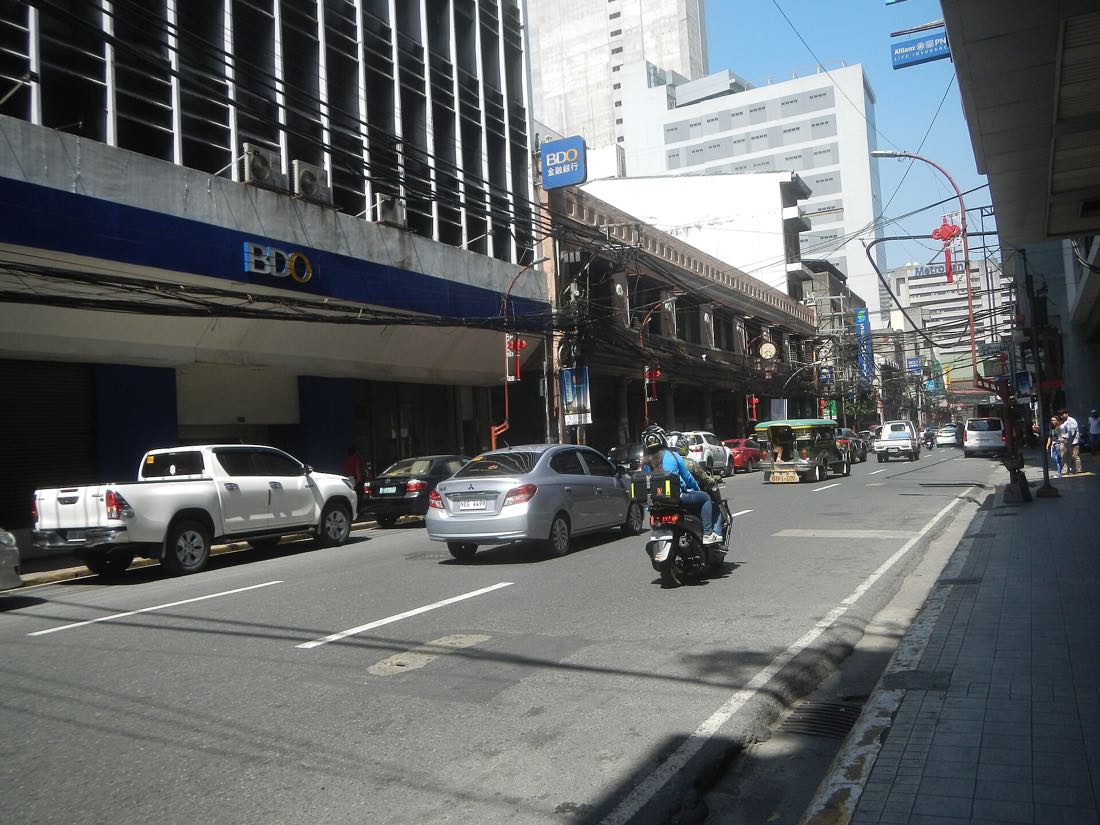
Binondo is not pretty. It is a working wholesale district with tangled overhead cables, delivery trikes and 400 years of Hokkien-Filipino cooking crammed into about eight walkable blocks.
The route most people run starts near Binondo Church and works along Ongpin, Yuchengco and Carvajal. A typical five-stop crawl: dumplings at Dong Bei on Yuchengco, fried chicken at Sincerity (est. 1956), fresh lumpia at New Po-Heng in the Uno Seng courtyard, hand-pulled noodles at Lan Zhou La Mien, and hopia from Eng Bee Tin to carry out.
Carvajal Street is the one to walk even if you are not eating — a covered alley of wet-market stalls barely two metres wide, with Quik Snack tucked into it.
The Estero stalls beside the canal are the badge-of-honour stop: frog legs, and better food than the setting suggests. Locals eat there constantly; nervous stomachs should stick to the restaurants with walls.
Finish at 1919 Grand Café in the old HSBC banking hall if you want one sit-down course in a genuinely grand room, or walk out over the Binondo–Intramuros Bridge to the Esplanade.
Is a Binondo crawl for you?
Binondo, practically
Guided, or do it yourself?
Binondo food tours are the highest-satisfaction product in Manila — the street-food and Chinatown crawls score 4.9–5.0★ across platforms, better than any city tour. Book one if you want the history and the ordering handled; skip it if you are confident pointing at food.
Binondo FAQ
Is Binondo safe for tourists?
In daylight, yes — it is a busy commercial district with police and constant foot traffic. The real risk is pickpocketing in the crush around Ongpin and neighbouring Divisoria: keep your bag in front of you and your phone in a zipped pocket. Tondo starts immediately north of Divisoria and is not a place to wander after dark.
How much does a Binondo food crawl cost?
About ₱400–500 per person if you do it yourself across four or five stops, which is roughly $7–8. Guided tours run $47–60 for around three hours with tastings included. Everything is cash.
What time should you do the Binondo food crawl?
Start between 10am and 11am and finish by 2pm. Several of the best stalls sell out by early afternoon, and the district empties in the evening — Binondo is a lunch neighbourhood, not a dinner one.
How do you get to Binondo from Intramuros?
Walk. The Binondo–Intramuros Bridge opened in 2022 and links the two directly across the Pasig; it is about 15 minutes on foot from Plaza Roma to Ongpin Street via the Pasig River Esplanade. By LRT-1 the stop is Carriedo.
Is Binondo or Divisoria better for food?
Binondo, without question. Divisoria is a wholesale shopping district — chaotic, cheap and a genuine experience, but it is a place to buy fabric and Christmas decorations, not to eat. Do Divisoria only if you actively want the market.
Can you eat at the Estero stalls safely?
Locals do, constantly, and the canal-side stalls are a Binondo institution known for frog legs. The rule that applies everywhere in Manila applies here: pick the busiest vendor cooking to order, avoid communal dip bottles and pre-cut fruit, and eat at noon when turnover is highest.